
remittance notes

An Irish lady once told me, “almost every Irish family has a relative in the United States.” Because of famine and poverty, a large proportion of the population of Ireland had emigrated to the United States.
The wave of Southern Chinese emigrating to Southeast Asia in the 19th and early 20th centuries was the same.
As director Lan Hongchun of the recent film on Chinese migration to Nanyang Dear You 給阿嬤的情書 put it,
“It is the collective memory of our (Teochew) community. I’m sure not only me, but everyone who has such an ability will want to talk about it.”
Director Lan grew up in the Shantou region, where he grew up listening to these stories. His great-grandfather had left for Nanyang and they lost contact with him since. His mother’s uncle left for Thailand and never came back, but upon his passing, his children in China went to Thailand to bring his ashes back.
Many of these people who left went to Nanyang to do odd jobs, backbreaking manual labour, find a better life, or, when times were tough, simply to get by. They called it 謀生 mousheng— literally, the plan to survive.
These men then sent money back to their wives, or their parents, back in Southern China. The remittance money, along with remittance letters detailing their lives abroad, were called 僑批 qiaopi.
Let’s take a look at remittance letters in more detail.
“After the Opium war, Chinese emigrants continued to send remittances back to their hometowns, which became a critical source of foreign exchange for modern China. From 1864 to 1980, overseas Chinese remittances totaled approximately $10.8 billion. During WWII, remittances from Southeast Asian Chinese were used to purchase airplanes, medicine, military rations and other supplies.
In times of economic hardship, annual remittances amounting to hundreds of millions were allocated to building bridges, roads and schools.
By the 1980s, before remittances agencies faded from history, China had received over 30 million remittances letters in total.”
- Dear You (給阿嬤的情書)
Which dialect you spoke determined where you were going to go, where the 水客 sui haak (the man driving the boat, your only means of transport and your lifeline) took you. It was where you would find your kinsmen and people who spoke your dialect already settled there.
If you spoke Teochew, chances were you were headed to Thailand or Singapore. If you spoke Hokkien, you were headed to the Philippines, Malaysia or Indonesia. If you spoke Cantonese, you were headed to Kuala Lumpur or neighbouring Perak in Malaysia. If you were from the Siyi region (where Toishan is), you might be headed much further, to North America.
When these emigrants sent money and wrote letters back home, they often conveyed their message to a letter writer who knew how to read and write. Many years later, these letters, collected at home for generations and gathering dust in attics, have either been discarded during house moves or handed in to the government for public interest. The Fujian provincial government has received about 80,000 documents in total. There is a museum in Shantou just dedicated to 僑批 qiaopi, remittance letters.1
Let’s take a look at the structure of remittance notes and the stories they contain.
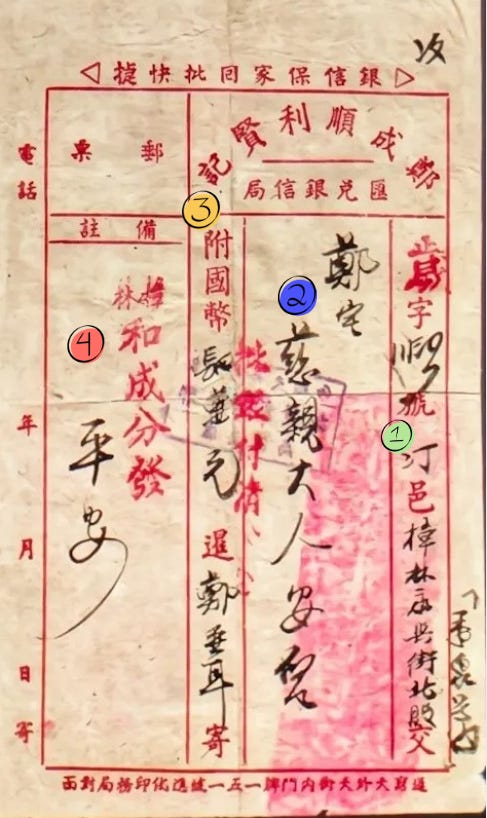
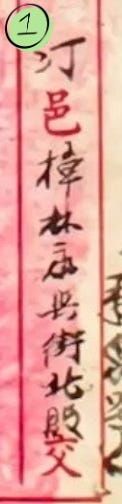
This probably referred to the town of Zhang Lin 樟林 in Theng Hai 澄海 county2 in Shantou province. Theng Hai is also known as Theng Yap 澄邑 county. Note that 澄 is written as 汀 above (汀邑). Both words sound similar, so it may have been a well accepted substitution back then to those familiar with the place.
鄭宅 “Zheng zhai” - Cheng household
慈親大人 “ciqin daren” - mother
Literally, to the Cheng household, specifically, the “great benevolent family member” in the Cheng household, an archaic and respectful term for mother.

附國幣 “fu guo bi” - guobi, lit. ‘national currency’, was the name of the currency circulating during the era of the Republic of China (under Kuomintang rule). So, although there are no dates mentioned in this cover letter, we can assume it was written during the time of the Republic of China (e.g. 1919-1949).
暹 “siam” or 暹羅 pronounced “siam lor” in Teochew or Hokkien - is the archaic Chinese name for Thailand
So, the sender surnamed Cheng, is sending ROC dollars to his family in Shantou from Thailand. Bonus points for anyone who can figure out how much he sent!
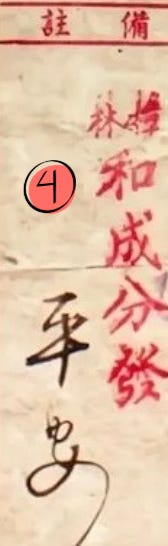
Under 註備 (notes/footnotes), 平安 pingan, peace is written. Usually, when an emigrant first arrives in Nanyang, the first correspondence they would send back is to 報平安, literally “report peace”, that they have arrived safely, all is well, etc. along with a bit of money.
If they’re having a tough time and there isn’t any good news to report back to the family in Mainland China, usually, not wanting to make their relatives worry, often many will say “all is well” as well.
This is an example of a letter written by somebody who is “reporting peace” back to his mother after arriving in Nanyang.
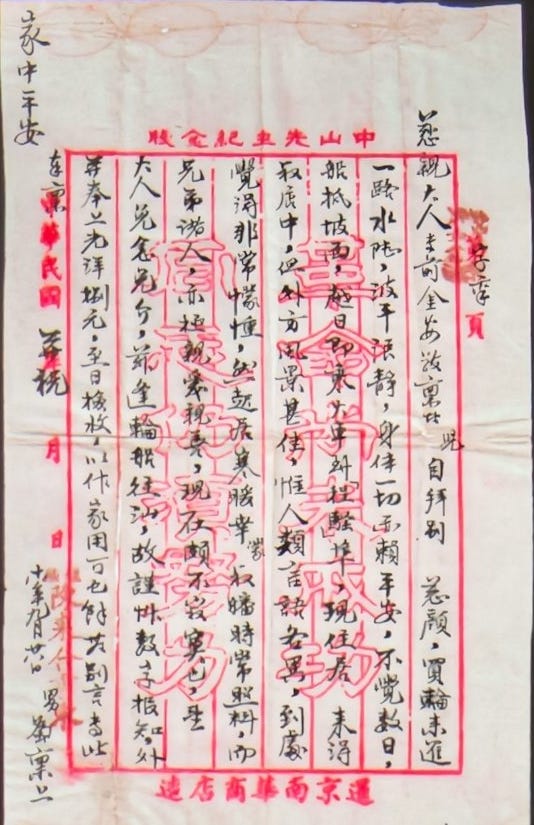
Let’s first examine when it was written. The date written on this letter is 十八年九月廿八日, i.e. the 28th day of the 9th month of 18th year.
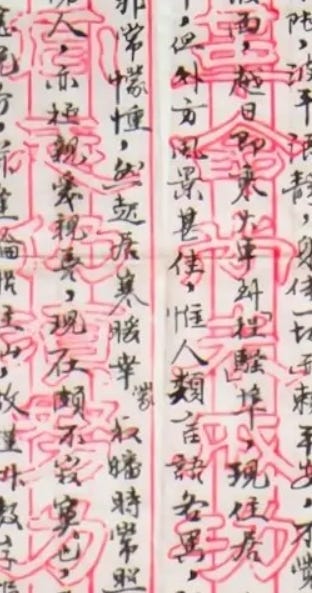
The red text printed on the letter paper reads “the revolution has not yet been achieved, comrades must work hard”, a well known saying of Sun Yat Sen’s. Likely, then, this letter is written in the 18th year of the founding of the Republic of China, in 1929.
From what I can make of the letter, the contents are as follows (welcome to any corrections or suggestions)—
Respectful mother… since I have said farewell… I have bought the boat passage to Siam. Throughout the sea and land journey, the waves have been still and peaceful. Not after a few days, the boat landed on the Western slope. The next day I took a train to ?? port. I am staying at my Uncle’s place now… but the view of outside is pretty good. Everyone speaks a different language here. I feel confused every place I go……. Uncle and Aunt take care of me often, as well as my brothers and everyone… are very kind and compassionate…. as thus, I do not feel lonely. Elders… do not have to worry… everytime a boat goes to Chaoshan… I will write news of updates (?). I give 8 dollars to ??…. for household use…. Signed.
Sometimes, notes were shorter but contained no less depth of feeling.
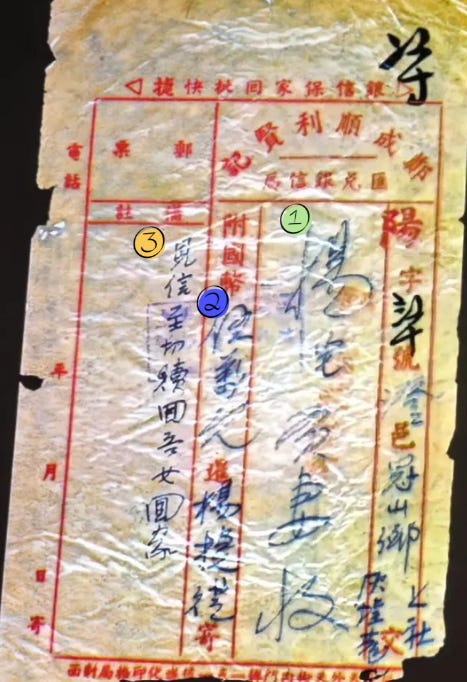
The man, surnamed Yang, addresses the note to presumably his wife (the word 妻 for wife is written there) in the Yang household.
He remits 50,000 ROC dollars
The footnotes section reads “見信至切 贖回吾女回家”—
Read this letter with the utmost urgency. Buy my daughter back and bring her home.
Sometimes, as families were too poor, they had to sell off their children to wealthier families to work as maids, sometimes betrothed to be married off into the family when they became of age.
Asides from money, these emigrants sent goods as well, such as mosquito nets3, oil and cured meats.
After receiving the money, relatives in China would send a note back called 回批 huipi, which acknowledged receipt of the money.
This back and forth communication went on for years. Oftentimes, the men who went abroad remarried and started new lives and families in Nanyang. Not a lot returned to China, although there are exceptions, such as the wave of Indonesian Chinese returning to China in the 1960s due to local policies marginalising the Chinese in Indonesia.
Women also boarded boats headed to Nanyang, either to pursue their own livelihood (like in the case of the majies), or, such as in the case of my great-grandmother, to be married off to a predetermined man their parents have decided on.
These first generation migrants referred to China as 唐山 (Tong Shan in Cantonese or Teng Swa in Hokkein/Teochew), whenever they talked about the place they came from.
For the second and third generation migrants, many of these stories have become parents’ or grandparents’ tales. Many adopted local language and local customs to varying degrees. In Thailand, many of these first generation migrants married local Thais and their descendants speak and identify as Thai. In Malaysia and Singapore, though Chinese dialects are often still used within families, written Chinese is much more difficult to learn. My grandmother once received a letter from some relatives in China, and, exasperated that none of her children could read it, sent her youngest son (my uncle) to Chinese school so “at least someone can read Chinese!”. Sometimes, it wasn’t so easy, and learning Chinese meant attending an illegal gathering. The movie Dear You details an unofficial ‘school’ in Thailand, an informal gathering of children in a boarding house, who were secretly taught to read and write Chinese as it was illegal for such activities to take place then.
Thank you for reading! If you are interested in learning more about qiaopi, including logistics, the different currencies used then, and also the way they organised and sorted the remittance letters, drop a comment below and perhaps I’ll dive deeper in another installment on this next time! 🚣🏽🚣🏽🚣🏽
汕頭僑批博物館 Shantou Qiaopi Museum
Cheong, Lee & Poh “Chinese Overseas Remittances to China: The Perspective from Southeast Asia” — Journal of Contemporary Asia, 2013.
“Which dialect you spoke determined where you were going to go, where the 水客 sui haak (the man driving the boat, your only means of transport and your lifeline) took you. It was where you would find your kinsmen and people who spoke your dialect already settled there”
So true! And a testament to people-to-people connections. My grandparents also said that the dialect that the border officer he got also determined how our family name got spelt in English 😅
I loved this deep dive so much. Love writing that covers history, family and language!